Showing posts with label ASSAM. Show all posts

Friday, 10 September 2021

READING SKILL

Rajesh Konwar


READING SKILL

READING SKILL


Reading is the most useful and important skill. It is more important than speaking and writing. Reading is a source of joy. Listening and speaking are the reproductive aspects, and reading and writing are the productive aspects of language skills. The learners of English must know how to read English because reading opens the gate of knowledge.

MICRO SKILLS

Some micro-skills are involved in reading. The reader has to:

1. Decipher the script. In an alphabetic system or a syllabary, this means establishing a relationship between sound and symbol. In a pictograph system, it means associating the meaning of the words with the written symbols.

2. Recognise vocabulary.

3. Pick out keywords.

4. Such as those identifying topics and main ideas.

5. Figure out the meaning of the words, including unfamiliar terms.

6. Vocabulary, from the written context.

7. Detect sentence constituents, such as subject, verb, object, preposition, etc.

TYPES OF READING

There are mainly six types of reading:

1. Loud reading.

2. Silent reading.

3. Intensive reading.

4. Extensive reading.

5. Supplementary reading.

6. Library reading.

In the recent publication of Day 1993, which gives a variety of new ways of teaching reading, the editor classifies reading into three kinds:

1. Loud/Oral reading

2. Intensive reading.

3. Extensive reading

LOUD READING: Loud reading is also known as oral reading. While teaching loud reading, the teacher should emphasise correct pronunciation. He should correct the wrong pronunciation immediately and give a drill of correct pronunciation to the entire class.

ADVANTAGES OF LOUD READING:

1. Students follow the model reading of their teacher and thus learn the right method of reading.

2. This develops the skill of speech and giving lectures.

3. Mistakes concerning pronunciation can be corrected quickly.

4. It trains sensory organs – eyes, ears, and mouth – because in loud reading, they work in coordination.

5. Students learn by imitation.

SILENT READING: While doing silent reading, the student should concentrate his/her attention on understanding the subject matter or topic. It means that reading should be silent without disturbance from any quarter. Silent reading is regarded as the most important aspect of reading:

ADVANTAGES OF SILENT READING:

1. Obviously, the speed in silent reading is more than in the case of reading aloud, so it saves time and energy.

2. It develops the ability to read with interest.

3. After reading a passage, the students can translate it into their own language.

4. It initiates self-education and deep study.

5. In later life, silent reading has immense value in public places.

INTENSIVE READING: Intensive reading means the detailed study of the prescribed prose/passage. Intensive study is. Therefore, also called a detailed study, intensive reading requires concentration on the subject matter.

THE OBJECTIVES OF INTENSIVE READING:

1. To promote a deeper knowledge of the language on the subject matter and the power of expression.

2. To enable the students to understand the matter and write the English language correctly.

3. To develop the habit of thinking in English among the students.

4. To enable them to pronounce the words correctly.

5. To enable them to know the language completely by heart.

STEPS IN INTENSIVE READING:

The following steps should be taken for intensive reading: 

1. Selection of the topic.

2. Introduction of the topic.

3. Presentation of text.

4. Model reading.

5. Loud reading.

6. Explanation.

7. Testing the comprehension level of students.

ADVANTAGES OF INTENSIVE READING:

1. It increases the active and accurate vocabulary.

2. It helps in learning grammar.

3. It explains the meaning.

4. It improves the power of expression.

5. It is the most effective method of teaching the subject matter.

EXTENSIVE READING: Extensive reading is also known as rapid reading or independent reading. Extensive reading has been strongly recommended by the Indian Education Commission (1964-66). The chief purpose of extensive reading is to concentrate on the subject matter. Extensive reading means reading silently and quickly to understand the subject matter.

THE OBJECTIVES OF EXTENSIVE READING:

1. To enable the students to understand the meaning of the passage and prose as clearly as possible.

2. To increase the accurate and active vocabulary of students.

3. To develop an interest in reading in the students.

4. To promote the habit of self-study in students.

5. To develop the power of concentration in students.

STEPS IN EXTENSIVE READING:

The following are the steps in extensive reading:

1. Introduction.

2. Silent reading.

3. Questioning.

4. Recapitulation.

In the procedure of extensive reading, it is desirable to have the following points in mind, as advised by Thomas and Wyatt:

1. The matter must be understood by readers to increase interest.

2. The matter should be read rapidly; otherwise, interest will flag.

ADVANTAGES OF EXTENSIVE READING:

1. It keeps the entire class busy and active.

2. It helps in the assimilation of ideas and thoughts.

3. It increases vocabulary.

4. It has a high transfer of learning value. Since it prepares students for library reading.

SUPPLEMENTARY READING

The function of supplementary reading is to supplement the work of intensive reading. The supplementary reader should be in a standard language so that the students may read and understand it with someone’s help.

ADVANTAGES OF SUPPLEMENTAL READING

1. The words and phrases occurring in the textbook occur again in supplementary reading. In this way, they become firmly established in the minds of pupils.

2. The pupils develop a habit of reading.


LIBRARY READING:

Library reading is like supplementary reading. It encourages extensive reading, but both differ at different points. The important points about library reading are:

1. It is not a supervised reading.

2. It is done in a formal classroom situation of a classroom.

3. It is not done in set lessons.

METHODS OF TEACHING READING:

There are seven main methods of teaching reading. These are:

1. Alphabetic method.

2. Syllabic method.

3. Word method.

4. Phrase method.

5. Sentence method.

6. Story method.

7. Phonics method.

AIMS OF TEACHING READING:

1. To read English with accuracy.

2. To read with fluency.

3. To read with the correct pronunciation.

4. To read with understanding.

5. To enable pupils to take pleasure in reading.

6. To enable pupils to form a habit of reading.
 

Thursday, 5 November 2020

THE FIRST ASSAMESE

Rajesh Konwar


THE FIRST ASSAMESE

OR

FIRST IN ASSAM

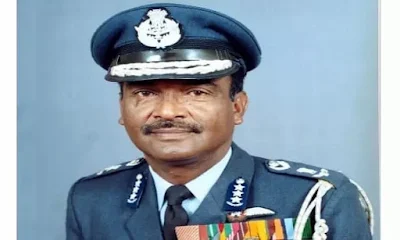
1) Name the first Assamese who became the Air Vice Marshall of Indian Air Force.

Answer: Pranab Kumar Borbora.

THE FIRST ASAMESE
Pranab Kumar Borbora


2) Who was the first Assamese barrister? 

Answer: Anundoram Borooah.

THE FIRST ASSAMESE
Anundoram Borooah


3) Who was the first Assamese to become the cabinet minister of Union Cabinet?

Answer: Fakharuddin Ali Ahmed.

THE FIRST ASSAMESE
Fakharuddin Ali Ahmed

4) Who was the first Assamese Chairman of Sangeet Natak Academy? 

Answer: Dr. Bhupen Hazarika.

THE FIRST ASSAMESE
Dr. Bhupen Hazarika

5) Who was the first Assamese Chief Justice of High Court? 

Answer: Haliram Deka.


6) Who was the first Assamese to become the Justice of Supreme Court?

Answer: Parvati Kumar Goswami.


7) Who was the first Chief Minister of Assam?

Answer: Gopinath Bordoloi.

THE FIRST ASSAMESE
Gopinath Bordoloi

8) Who was the first Assamese Director of AIIMS?

Answer: Dr. Ramesh Deka.


9) Name the first Assamese to become the Director of National Museum. 

Answer: Rabin Dev Chaudhury.


10) Who was the first Assamese to become the Director of Reserve Bank of India?

Answer: Ganesh Phukan.


11) Who was the first Assamese Graduate?

Answer: Anundoram Barooah (1869).


12) Who were the first Assamese women graduates?

Answer: Sukhalata Dowarah and Sudhalata Dowarah.


13) Who was the first Assamese ICS?

Answer: Anundoram Barooah.


14) Who was the first Assamese woman to become the Justice of High Court?

Answer: Meera Sarma.


15) Who was the first Assamese woman to become the minister in the union cabinet? 

Answer: Renuka Devi Barkotoky.


16) Which is the first multi-language Online dictionary?

Answer: Xobdo (2006) www.xobdo.org.


17) Who was the first Assamese to become the President of India? 

Answer: Fakharuddin Ali Ahmed.


18) Who was the first Assamese to become the President of Indian Football Association?

Answer: Nurul Amin.


19) Who was the first Assamese to become the President of Indian National Congress?

Answer: Devakanta Baruah.


20) Who was the first Assamese recipient of Jnanpith Award?

Answer: Dr. Birendra Kumar Bhattacharyya, 1979.


21) Who was the first Assamese woman recipient of Jnanpith Award?

Answer: Mamoni Roisom Goswami, 2000.


22) Nane the first Assamese recipient of Padma Bhushan.

Answer: Krishnakanto Handique, 1967.


23) Name the first Assamese woman recipient of Padma Bhushan.

Answer: Pushpalata Das, 1999.


24) Who was the first Assamese recipient of Padmasree?

Answer: Krishnakanto Handique, 1955.


25) Who was the first Assamese woman recipient of Padmasree?

Answer: Nalinibala Devi, 1957.


26) Name the first Speaker of Assam Legislative Assembly.

Answer: Babu Basanta Kumar Das.


27) Who was the first Assamese to become the Vice-Chancellor of a University? 

Answer: Krishnakanto Handique, Gauhati University, 1948-1957.


28) Who was the first Assamese to become the Vice-Chancellor of a University outside Assam?

Answer: Sarat Kumar Dutta, Kurukshetra University.


29) Who was the first Assamese to become the Chief Justice of Supreme Court?

Answer: Ranjan Kumar Gogoi.


30) Who was the first Assamese Arjuna Award winner?

Answer: Bhogeswar Baruah.


31) Name the first Assamese to win a Gold medal at an international track event.

Answer: Hima Das.

THE FIRST ASSAMESE
Hima Das

32) Which is the first film studio on Assam?

Answer: Jyoti Chitraban.


33) Which is the first Assamese printed book?

Answer: Dharma Pustak by Atmaram Sharma.


34) Which is the first university in Assam?

Answer: Gauhati University.

THE FIRST ASSAMESE
Gauhati University

35) Which is the first Assamese coloured movie?

Answer: Bhaiti.


36) Which is the first bridge over the Brahmaputra?

Answer: Saraighat Bridge.

THE FIRST ASSAMESE
Saraighat Bridge

37) Name the first radio station in Assam.

Answer: Guwahati & Shillong.


38) Who was the first Assamese to get Phd.?

Answer: Maidul Islam Bora.


39) Name the first Assamese Governor.

Answer: Bishnuram Medhi.


FIRST IN ASSAM

Rajesh Konwar

 FIRST IN ASSAM

FIRST IN ASSAM


1. Name the first Assamese romantic poem. Who was the poet of this poem?

Answer: Bon Kunwori. The poet was Chandra Kumar Agarwala.

2. Which is the first Assamese sonnet? 

Answer: Priyotomar Sithi by Hemchandra Goswami

3. What is the name of the Assamese language magazine? When was it published?

Answer: Orunodoi or Aroonudai. It was published in1846.

4. Who was the first editor of Arunudoi?

Answer: Dr. Nathan Brown.

5. Name the first Assamese language social play.

Answer: Ram Navami by Gunabhiram Barua (1857).

6. Who was the first Assamese to win Sahitya Akademi award? 

Answer: Jatindranath Dowara for his book Bon Phul (poetry), 1955.

7. Which is the first Assamese Newspaper? Answer: Dainik Batori (1935).

8. Name the first Assamese historical novel. 

Answer: Bhanumoti by Padmanath Gohain Baruah (1890).

9. Who was the first president of Assam Sahitya Sabha?

Answer: Padmanath Gohain Baruah.

10. Who was the first literary pensioner of Assam?

Answer: Padmanath Gohain Baruah.

11. Name the first Assamese Short story collection.

Answer: Surabhi by Lakshminath Bezbaruah.

12. Who was the first Assamese to receive Jnanpith Award?

Answer: Birendra Kumar Bhattacharya.

13. Who was the first Assamese translator of the Ramayana?

Answer: Madhab Kandali.

14. Which is the first printed book in Assamese language?

Answer: Dharma Pustak by Aatmaram Sarma (1813).

15. Name the first Assamese prose composition.

Answer: Katha-Gita by Bhattadeva.

16. Which is the first modern biography in Assamese?

Answer: “Anandaram Dhekial Phukanor Jiwon Sorit” by Gunabhiram Baruah (1880).

17. Which is the first Assamese play to be broadcast over All India Radio?

Answer: Been Bairagi by Prafulla Chandra Baruah (1935).

18. Which is the first Assamese travelogue?

Answer: Switzerland Bhraman by Birinchi Kumar Baruah (1948).

19. Name the first thesis written on the Assamese language.

Answer: Assamese: It’s formation and development by Dr. Banikanta Kakoti (1940).

20. Name the first Assamese modern novel.

Answer: Mirijiyori by Rajanikanta Bordoloi (1894).


Thursday, 15 October 2020

OUR STATE - ASSAM

Rajesh Konwar

 ASSAM

OUR STATE - ASSAM

1. Which Viceroy had combined the eastern district of Bengal with Assam in 1905?

Answer: Lord Curzon.

2. With which freedom movement was Kanaklata Barua associated?

Answer: Quit India Movement.

3. When was the Treaty of Yandaboo signed in?

Answer: 1826.

4. Who was the Chief Minister of Assam when the capital of the state was shifted to Dispur from Shillong?

Answer: Sarat Chandra Singha.

 5. Name the first Peasant Uprising in Assam against the British.

Answer: Phulaguri Dhawa.

6. In which year tea was discovered in Assam by Robert Bruce?

Answer: 1823.

7. For approximately how many years The Ahom dynasty ruled the Ahom kingdom?

Answer: 600 years.

8. When was the historic Assam Accord signed?

Answer: 15th August 1985.

9. Which ruler is popularly known as ‘Chilarai’?

Answer: Sukladhvaj.

10. Who was the first tea planter of India?

Answer: Maniram Dewan.

11. Who represented Assam in the Round table conference of 1937?

Answer: Chandradhar Baruah.

12. During which king’s rule Srimanta Sankardeva was able to establish ‘Ek Saran Naam Dharma’?

Answer: Naranarayan.

13. Who was the founder of the Varmana Dynasty?

Answer: Pushyavarman.

14. When did the Chinese pilgrim Hiuen Tsang visit Kamarupa?

Answer: 643 A.D.

15. Medieval period poet Rama Saraswati was a court poet of which king?

Answer: Durlabhnarayan.

16. Who was the first king from Assam to perform ‘Aswamedha Yagna’?

Answer: Mahendravarman.

17. Name the capital of Varmana Dynasty of Kamrupa Kingdom.

Answer: Pragjyotishpur.

18. Who among the following is the earliest known king of ancient Assam?

Answer: Mahiranga Danava.

19. Who was the founder of Chutiya kingdom?

Answer: Birpal.

20. Which King rebuilt the Kamakhya Temple?

Answer: Naranarayan.


Wednesday, 14 October 2020